
How A Place for Mom and Caring.com Work for Finding In‑Home Care


A Place for Mom and Caring.com are large senior care referral marketplaces. Families share basic details about their parent’s needs, and the platform routes those details to partner providers in the area. A counselor may call to discuss preferences, then several home care agencies are alerted and begin outreach.
At a high level, they provide quick introductions and broad market visibility. You get a shortlist of home care agencies fast, without needing to research each one from scratch. For a primer on what home care includes, see What Is Home Care?
What you’ll typically experience
Intake and matching
You submit your parent’s location, care needs, budget, and timing. The platform attempts to match those needs to agencies in its network that have availability and the right service model.
Multiple agency contacts
Agencies receive your care request and many will call or email. This can create momentum, but it also means you may field several similar outreach messages in a short span.
Agency comparisons
You’ll compare hourly rates, minimums, certifications, and caregiver availability. Use a structured checklist to vet companies and caregivers. For help, read How to Vet a Home Care Agency.
Benefits — and common frustrations
The good
Fast discovery of local agencies
A dedicated advisor to explain basics
Initial sense of market pricing and availability
The headaches
High‑volume calls from multiple agencies
Variable quality and transparency across providers
Limited control over which caregivers you meet first
Time spent repeating your parent’s story to each agency
If you prefer a calmer, more controlled process, you may want a service that reduces the number of inbound calls you receive.
How these platforms make money
Most large referral sites are compensated by participating providers when a referral becomes a client. That creates strong incentives to send your inquiry to many agencies quickly. It does not mean the agencies are low quality, but it can influence which providers see your case first. Always ask about experience with your parent’s specific needs, caregiver training, supervision, and backup coverage.
For cost context and payment options, see our guide to private pay in‑home care, including rates for caregivers, nurses, and homemakers: A Guide to Private Pay Home Care.
Privacy, pace, and control
Expect rapid follow‑up
When you submit an inquiry, be prepared for quick outreach. If you want fewer calls, ask your advisor for email‑only communication and specify preferred contact times. Keep a single shared notes document to track agency names, rates, minimums, and next steps.
Maintain ownership of your criteria
Define must‑haves before you speak with agencies:
Required schedule and hours
Caregiver qualifications and dementia training if relevant
Supervision model and on‑call support
Backup or replacement process
Total cost including minimums and overtime
Clear criteria helps you move faster without feeling rushed.
When A Place for Mom and Caring.com can be useful
Urgent or broad searches
If you need coverage quickly or want to sample several agencies fast, these platforms can surface options and jumpstart outreach.
New to senior care
If you are brand new to the industry, having an advisor explain terms like ADLs, care plans, and minimums can be reassuring. For foundational knowledge on costs, services, and insurance, visit Clara Home Care.
A calmer alternative with Clara Home Care
Clara Home Care is designed to give families the benefits of marketplace discovery without the feeling of being overwhelmed. Families share their care needs once. Clara then connects you to vetted, high‑quality home care agencies and keeps the process organized, so you avoid a flurry of sales calls.
What makes Clara different
Focus on quality and fit. Clara prioritizes agencies with strong caregiver training, supervision, and reliability.
Fewer interruptions. Your care request is handled thoughtfully to limit call volume.
Transparent next steps. The process is structured, with clear comparisons on schedule, skills, and pricing.
Practical education. Clara’s resource library covers essentials like costs, scope of care, and payment strategies. Explore A Guide to Private Pay Home Care and What Is Home Care?.
Practical steps to choose the right home care agency
Prepare a snapshot of needs
List diagnoses, mobility details, memory issues, fall risks, and tasks needing help. Include days, times, and preferred start date.
Ask the same five questions of every agency
How do you recruit, train, and supervise caregivers?
What are your minimum hours and total weekly costs?
How do you handle cancellations, replacements, and emergencies?
Can we interview caregivers before the first shift?
How do you update families and track care plans?
Compare caregivers, not just agencies
If dementia support is needed, request caregivers trained in communication strategies, de‑escalation, routines, and safe engagement. Clarify medication assistance rules, since PCAs may have limits by state.
Confirm the logistics
Align on start date, schedule, transportation needs, and any equipment. Document everything in writing before the first shift. For more detail on costs, scheduling, and options, explore Clara Home Care.
Bottom line
Large referral sites like A Place for Mom and Caring.com can be helpful for quick discovery, especially if you need several introductions fast. They work by sending your inquiry to multiple agencies, which speeds up outreach but can feel noisy. If you prefer a guided, lower‑stress experience that centers quality, caregiver fit, and clear communication, Clara Home Care offers a calmer path to the same goal — safe, reliable support for your parent at home.
Families can submit their care needs to get connected to quality agencies at Clara Home Care.
A Place for Mom and Caring.com are large senior care referral marketplaces. Families share basic details about their parent’s needs, and the platform routes those details to partner providers in the area. A counselor may call to discuss preferences, then several home care agencies are alerted and begin outreach.
At a high level, they provide quick introductions and broad market visibility. You get a shortlist of home care agencies fast, without needing to research each one from scratch. For a primer on what home care includes, see What Is Home Care?
What you’ll typically experience
Intake and matching
You submit your parent’s location, care needs, budget, and timing. The platform attempts to match those needs to agencies in its network that have availability and the right service model.
Multiple agency contacts
Agencies receive your care request and many will call or email. This can create momentum, but it also means you may field several similar outreach messages in a short span.
Agency comparisons
You’ll compare hourly rates, minimums, certifications, and caregiver availability. Use a structured checklist to vet companies and caregivers. For help, read How to Vet a Home Care Agency.
Benefits — and common frustrations
The good
Fast discovery of local agencies
A dedicated advisor to explain basics
Initial sense of market pricing and availability
The headaches
High‑volume calls from multiple agencies
Variable quality and transparency across providers
Limited control over which caregivers you meet first
Time spent repeating your parent’s story to each agency
If you prefer a calmer, more controlled process, you may want a service that reduces the number of inbound calls you receive.
How these platforms make money
Most large referral sites are compensated by participating providers when a referral becomes a client. That creates strong incentives to send your inquiry to many agencies quickly. It does not mean the agencies are low quality, but it can influence which providers see your case first. Always ask about experience with your parent’s specific needs, caregiver training, supervision, and backup coverage.
For cost context and payment options, see our guide to private pay in‑home care, including rates for caregivers, nurses, and homemakers: A Guide to Private Pay Home Care.
Privacy, pace, and control
Expect rapid follow‑up
When you submit an inquiry, be prepared for quick outreach. If you want fewer calls, ask your advisor for email‑only communication and specify preferred contact times. Keep a single shared notes document to track agency names, rates, minimums, and next steps.
Maintain ownership of your criteria
Define must‑haves before you speak with agencies:
Required schedule and hours
Caregiver qualifications and dementia training if relevant
Supervision model and on‑call support
Backup or replacement process
Total cost including minimums and overtime
Clear criteria helps you move faster without feeling rushed.
When A Place for Mom and Caring.com can be useful
Urgent or broad searches
If you need coverage quickly or want to sample several agencies fast, these platforms can surface options and jumpstart outreach.
New to senior care
If you are brand new to the industry, having an advisor explain terms like ADLs, care plans, and minimums can be reassuring. For foundational knowledge on costs, services, and insurance, visit Clara Home Care.
A calmer alternative with Clara Home Care
Clara Home Care is designed to give families the benefits of marketplace discovery without the feeling of being overwhelmed. Families share their care needs once. Clara then connects you to vetted, high‑quality home care agencies and keeps the process organized, so you avoid a flurry of sales calls.
What makes Clara different
Focus on quality and fit. Clara prioritizes agencies with strong caregiver training, supervision, and reliability.
Fewer interruptions. Your care request is handled thoughtfully to limit call volume.
Transparent next steps. The process is structured, with clear comparisons on schedule, skills, and pricing.
Practical education. Clara’s resource library covers essentials like costs, scope of care, and payment strategies. Explore A Guide to Private Pay Home Care and What Is Home Care?.
Practical steps to choose the right home care agency
Prepare a snapshot of needs
List diagnoses, mobility details, memory issues, fall risks, and tasks needing help. Include days, times, and preferred start date.
Ask the same five questions of every agency
How do you recruit, train, and supervise caregivers?
What are your minimum hours and total weekly costs?
How do you handle cancellations, replacements, and emergencies?
Can we interview caregivers before the first shift?
How do you update families and track care plans?
Compare caregivers, not just agencies
If dementia support is needed, request caregivers trained in communication strategies, de‑escalation, routines, and safe engagement. Clarify medication assistance rules, since PCAs may have limits by state.
Confirm the logistics
Align on start date, schedule, transportation needs, and any equipment. Document everything in writing before the first shift. For more detail on costs, scheduling, and options, explore Clara Home Care.
Bottom line
Large referral sites like A Place for Mom and Caring.com can be helpful for quick discovery, especially if you need several introductions fast. They work by sending your inquiry to multiple agencies, which speeds up outreach but can feel noisy. If you prefer a guided, lower‑stress experience that centers quality, caregiver fit, and clear communication, Clara Home Care offers a calmer path to the same goal — safe, reliable support for your parent at home.
Families can submit their care needs to get connected to quality agencies at Clara Home Care.
A Place for Mom and Caring.com are large senior care referral marketplaces. Families share basic details about their parent’s needs, and the platform routes those details to partner providers in the area. A counselor may call to discuss preferences, then several home care agencies are alerted and begin outreach.
At a high level, they provide quick introductions and broad market visibility. You get a shortlist of home care agencies fast, without needing to research each one from scratch. For a primer on what home care includes, see What Is Home Care?
What you’ll typically experience
Intake and matching
You submit your parent’s location, care needs, budget, and timing. The platform attempts to match those needs to agencies in its network that have availability and the right service model.
Multiple agency contacts
Agencies receive your care request and many will call or email. This can create momentum, but it also means you may field several similar outreach messages in a short span.
Agency comparisons
You’ll compare hourly rates, minimums, certifications, and caregiver availability. Use a structured checklist to vet companies and caregivers. For help, read How to Vet a Home Care Agency.
Benefits — and common frustrations
The good
Fast discovery of local agencies
A dedicated advisor to explain basics
Initial sense of market pricing and availability
The headaches
High‑volume calls from multiple agencies
Variable quality and transparency across providers
Limited control over which caregivers you meet first
Time spent repeating your parent’s story to each agency
If you prefer a calmer, more controlled process, you may want a service that reduces the number of inbound calls you receive.
How these platforms make money
Most large referral sites are compensated by participating providers when a referral becomes a client. That creates strong incentives to send your inquiry to many agencies quickly. It does not mean the agencies are low quality, but it can influence which providers see your case first. Always ask about experience with your parent’s specific needs, caregiver training, supervision, and backup coverage.
For cost context and payment options, see our guide to private pay in‑home care, including rates for caregivers, nurses, and homemakers: A Guide to Private Pay Home Care.
Privacy, pace, and control
Expect rapid follow‑up
When you submit an inquiry, be prepared for quick outreach. If you want fewer calls, ask your advisor for email‑only communication and specify preferred contact times. Keep a single shared notes document to track agency names, rates, minimums, and next steps.
Maintain ownership of your criteria
Define must‑haves before you speak with agencies:
Required schedule and hours
Caregiver qualifications and dementia training if relevant
Supervision model and on‑call support
Backup or replacement process
Total cost including minimums and overtime
Clear criteria helps you move faster without feeling rushed.
When A Place for Mom and Caring.com can be useful
Urgent or broad searches
If you need coverage quickly or want to sample several agencies fast, these platforms can surface options and jumpstart outreach.
New to senior care
If you are brand new to the industry, having an advisor explain terms like ADLs, care plans, and minimums can be reassuring. For foundational knowledge on costs, services, and insurance, visit Clara Home Care.
A calmer alternative with Clara Home Care
Clara Home Care is designed to give families the benefits of marketplace discovery without the feeling of being overwhelmed. Families share their care needs once. Clara then connects you to vetted, high‑quality home care agencies and keeps the process organized, so you avoid a flurry of sales calls.
What makes Clara different
Focus on quality and fit. Clara prioritizes agencies with strong caregiver training, supervision, and reliability.
Fewer interruptions. Your care request is handled thoughtfully to limit call volume.
Transparent next steps. The process is structured, with clear comparisons on schedule, skills, and pricing.
Practical education. Clara’s resource library covers essentials like costs, scope of care, and payment strategies. Explore A Guide to Private Pay Home Care and What Is Home Care?.
Practical steps to choose the right home care agency
Prepare a snapshot of needs
List diagnoses, mobility details, memory issues, fall risks, and tasks needing help. Include days, times, and preferred start date.
Ask the same five questions of every agency
How do you recruit, train, and supervise caregivers?
What are your minimum hours and total weekly costs?
How do you handle cancellations, replacements, and emergencies?
Can we interview caregivers before the first shift?
How do you update families and track care plans?
Compare caregivers, not just agencies
If dementia support is needed, request caregivers trained in communication strategies, de‑escalation, routines, and safe engagement. Clarify medication assistance rules, since PCAs may have limits by state.
Confirm the logistics
Align on start date, schedule, transportation needs, and any equipment. Document everything in writing before the first shift. For more detail on costs, scheduling, and options, explore Clara Home Care.
Bottom line
Large referral sites like A Place for Mom and Caring.com can be helpful for quick discovery, especially if you need several introductions fast. They work by sending your inquiry to multiple agencies, which speeds up outreach but can feel noisy. If you prefer a guided, lower‑stress experience that centers quality, caregiver fit, and clear communication, Clara Home Care offers a calmer path to the same goal — safe, reliable support for your parent at home.
Families can submit their care needs to get connected to quality agencies at Clara Home Care.
More about finding care
More about finding care

How to Vet a Home Care Agency: A Practical Guide for Families

Clara Editorial Team

What Is The Average Cost Of Nursing Home Care In Texas In 2025?
Clara Editorial Team

What Is the Average Cost of Nursing Home Care in Florida?
Clara Editorial Team

How Do I Find A Live-In Senior Caregiver?

Vanessa Bustos

How Much Does Home Care Cost In Miami?
Clara Editorial Team

How to Support Aging in Place in Baltimore
Clara Editorial Team

How to Find Reliable Home Care in Washington DC
Clara Editorial Team

Understanding the 100-Day Medicare Skilled Nursing Limit: What You Need to Know
Clara Editorial Team

The Future of Caregiving: Why Families Are Turning to Independent Caregivers
Clara Editorial Team

How to Find Home Care Near Me in Sacramento: A Comprehensive Guide
Clara Editorial Team
Get a 100% free consultation
Better care starts with Clara.
Discover and hire top-notch home care agencies without the headache for a price that fits your budget.


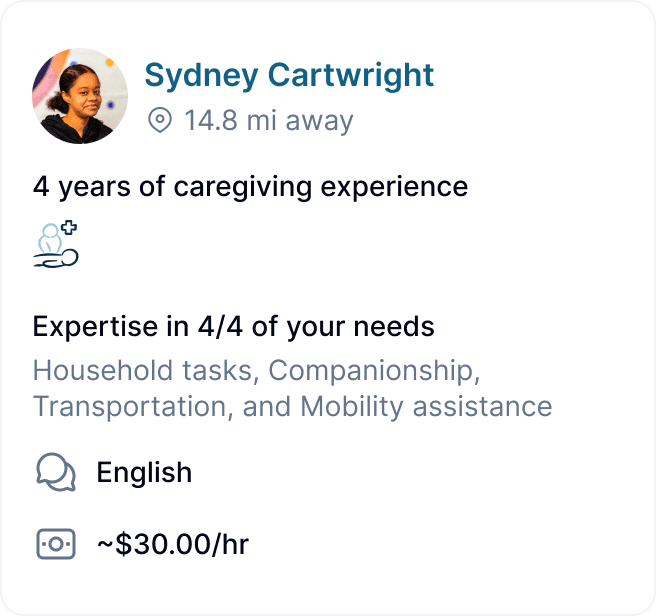
Get a 100% free consultation
Better care starts with Clara.
Discover and hire top-notch home care agencies without the headache for a price that fits your budget.
Get a 100% free consultation
Better care starts with Clara.
Discover and hire top-notch home care agencies without the headache for a price that fits your budget.